
Get SAP P_SAPEA_2023 Exam Practice Questions - Real and Updated
SAP Certified Professional - SAP Enterprise Architect Exam Dumps
This Bundle Pack includes Following 3 Formats
Test software
Practice Test
Answers (PDF)

P_SAPEA_2023 Desktop Practice
Test Software
Total Questions : 47

P_SAPEA_2023 Questions & Answers
(PDF)
Total Questions : 47

P_SAPEA_2023 Web Based Self Assessment Practice Test


Following are some P_SAPEA_2023 Exam Questions for Review


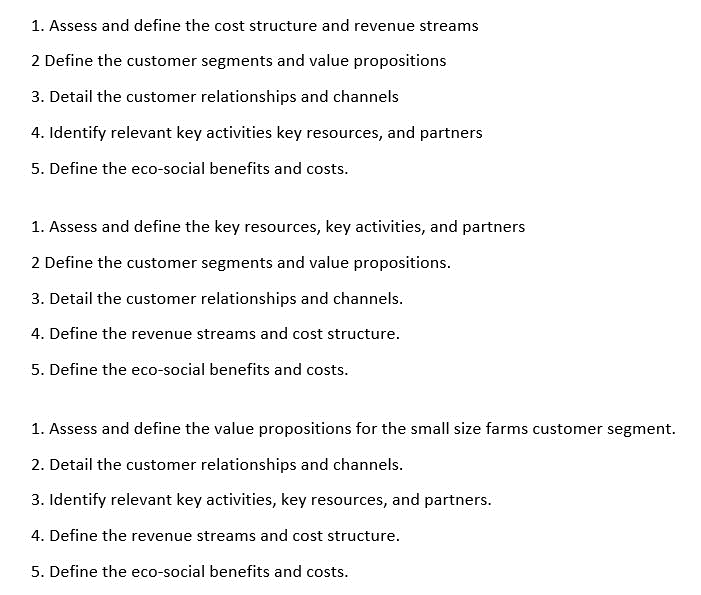
Green Elk & Company is the world's leading manufacturer of agricultural and forestry machinery. The former company slogan "Elk always runs" has recently been changed to "Elk feeds the world". One of Green Elk's strategic goals is to increase its revenue in the emerging markets of China, India, and other parts of Asia by 80 % within three years. This requires a new business model that caters to significantly smaller farms with limited budgets. You are the Chief Enterprise Architect and the CIO asks you to assess the now business model for smaller farms with smaller budgets. By applying the Sustainable Business Model Canvas, which sequence of steps is best practice?
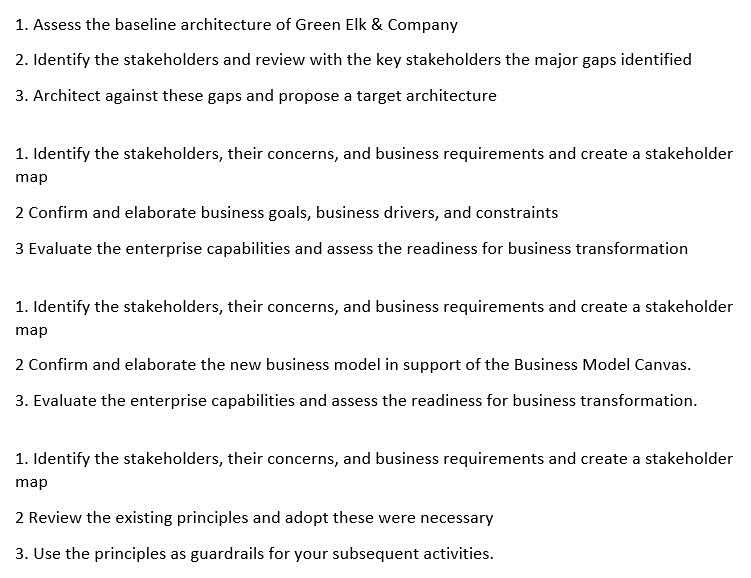
Green Elk & Company is the world's leading manufacturer of agricultural and forestry machinery. The former company slogan "Elk always runs" has recently been changed to "Elk feeds the world" One of Green Elk's strategic goals is to increase its revenue in the emerging markets of China, India and other parts of Asia by 80 % within three years. This requires a new business model that caters to significantly smaller farms with limited budgets The CIO asks you, the Chief Enterprise Architect, to present an architecture vision to address the aforementioned business challenge. According to the SAP Enterprise Architecture Framework, what is the best approach?
Demand and Supply Planning (SAP IBP) implementation has been identified as a quick win, based on feedback from a large cross section of Wanderlust stakeholders. As the Chief Enterprise Architect, you have now been asked to scope and contextualize the architecture project. Architecture principles have already been adopted. Which of the following activities should you to initiate to conclude the Statement of Architecture Work for the intended SAP IBP implementation initiative? Note: There are 3 correct answers to this question.
A custom web application developed with SAPUI5 and running on SAP Business Technology Platform uses large custom data objects deployed in a central data store (SAP HANA Cloud). The solution architect of the application is unsure about which tools to use for integration of this data from different SAP Sources into the central data store and asks you as the Enterprise Architect for guidance. Under which conditions is a data-oriented integration approach (Data Integration) preferable to other integration styles?
What kind of applications can you develop with SAP Business Application Studio?
Unlock All Features of SAP P_SAPEA_2023 Dumps Software

Types you want

pass percentage

(Hours: Minutes)

Practice test with
limited questions

Support


