
Get Blue Prism ASD01 Exam Practice Questions - Real and Updated
Blue Prism Designing Blue Prism Process Solutions Exam Dumps
This Bundle Pack includes Following 3 Formats
Test software
Practice Test
Answers (PDF)

ASD01 Desktop Practice
Test Software
Total Questions : 27

ASD01 Questions & Answers
(PDF)
Total Questions : 27
ASD01 Web Based Self Assessment Practice Test


Following are some ASD01 Exam Questions for Review


A proposed Blue Prism solution with the following properties has been created to automate the payment processing:
* There will be one Blue Prism process that will perform the steps described above.
* Where a case is an exception the status will be set in Paytex to "Manual Review" in order that the manual team can pick up the case from Paytex and contact the customer and conclude the case.
* It is anticipated that to meet the SLAs of the expected volumes up to 5 instances of the Blue Prism process will be required to run concurrently.
* A Blue Prism work queue will be used to host the payments. The queue will be configured for only 1 attempt per case and the key will be {region} & {source account number}.
* The process will be started by the scheduler at 06:00 and will stop at 05:50
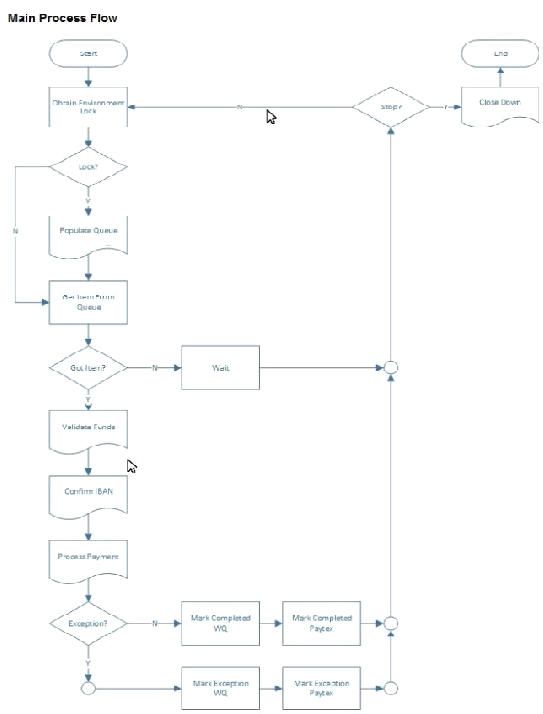
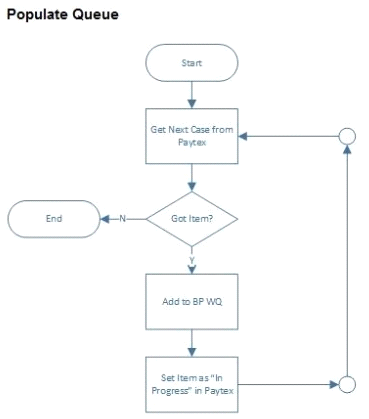
Which of the following are correct? (select 3 responses).
Consider the following steps for a theoretical manual process
* Check in input folder for any new files.
* If there are no files check again later as files can arrive anytime, and there is no limit to the number of files that may come.
* Open the next available file.
* Take the first case
* Start System X and find the case details.
* If the case can't be found, move to the next one.
* After finding the case in System X. fetch additional case details from System Y.
* Again if the case can't be found, move to the next one
* Analyse all the data to see if System Z should be updated.
* If the data does not meet the requirements, add notes indicating this to Systems X and Y and move to the next case
* If the data does meet the requirements, update the case in System Z
* Add notes to Systems X and Y and move to the next case.
* At the end of the file, go back and look for another
* Stop checking for new files at 16:00 and finish any remaining cases.
* When all work is complete create a report of the day's exception cases.
* Close down Systems X, Y and Z.
If the volume of incoming cases is such that 1 Resource PC can easily handle the workload, which of the following steps for an automated solution should be part of the 'Preparation' phase of an automated process?
Consider the following steps for a theoretical manual process
* Check in input folder for any new files.
* If there are no files check again later as files can arrive anytime, and there is no limit to the number of files that may come.
* Open the next available file.
* Take the first case
* Start System X and find the case details.
* If the case can't be found., move to the next one.
* After finding the case in System X. fetch additional case details from System Y.
* Again if the case can't be found, move to the next one.
* Analyse all the data to see if System Z should be updated
* If the data does not meet the requirements, add notes indicating this to Systems X and Y and move to the next case
* If the data does meet the requirements, update the case in System Z
* Add notes to Systems X and Y and move to the next case.
* At the end of the file, go back and look for another
* Stop checking for new files at 16:00 and finish any remaining cases.
* When all work is complete create a report of the day's exception cases.
* Close down Systems X, Y and Z.
If it is possible that there are long intervals between files arriving, what are the alternatives the process should take to control System X, System Y and System Z? (select 2 responses)
Which of the following accurately describes best practice when work is sourced from an application's workflow system?
It's technically possible for one business object to call another Outside of using utility objects are any of the following valid reasons why you would want to do this?
Unlock All Features of Blue Prism ASD01 Dumps Software

Types you want

pass percentage

(Hours: Minutes)

Practice test with
limited questions

Support


