
Get Salesforce Data-Architecture-And-Management-Designer Exam Practice Questions - Real and Updated
Salesforce Data Architecture and Management Designer Exam Dumps
This Bundle Pack includes Following 3 Formats
Test software
Practice Test
Answers (PDF)

Data-Architecture-And-Management-Designer Desktop Practice
Test Software
Total Questions : 222

Data-Architecture-And-Management-Designer Questions & Answers
(PDF)
Total Questions : 222

Data-Architecture-And-Management-Designer Web Based Self Assessment Practice Test


Following are some Data-Architecture-And-Management-Designer Exam Questions for Review


Cloud Kicks currently has a Public Read/Write sharing model for the company's Contacts. Cloud Kicks management team requests that only the owner of a contact record be allowed to delete that contact.
What should an Architect do to meet these requirements?
Universal Containers has defined a new Data Quality Plan for their Salesforce data and wants to know how they can enforce it throughout the organization. Which two approaches should an architect recommend to enforce this new plan?
Choose 2 answers
Universal Containers is creating a new B2C service offering for consumers to ship goods across continents. This is in addition to their well-established B2B offering. Their current Salesforce org uses the standard Account object to track B2B customers. They are expecting to have over 50,000,000 consumers over the next five years across their 50 business regions. B2C customers will be individuals. Household data is not required to be stored. What is the recommended data model for consumer account data to be stored in Salesforce?
Get Cloudy Consulting is migrating their legacy system's users and data to Salesforce. They will be creating 15,000 users, 1.5 million Account records, and 15 million Invoice records. The visibility of these records is controlled by a 50 owner and criteria-based sharing rules.
Get Cloudy Consulting needs to minimize data loading time during this migration to a new organization.
Which two approaches will accomplish this goal? (Choose two.)
DreamHouse Realty has a data model as shown in the image. The Project object has a private sharing model, and it has Roll-Up summary fields to calculate the number of resources assigned to the project, total hours for the project, and the number of work items associated to the project.
There will be a large amount of time entry records to be loaded regularly from an external system into Salesforce.
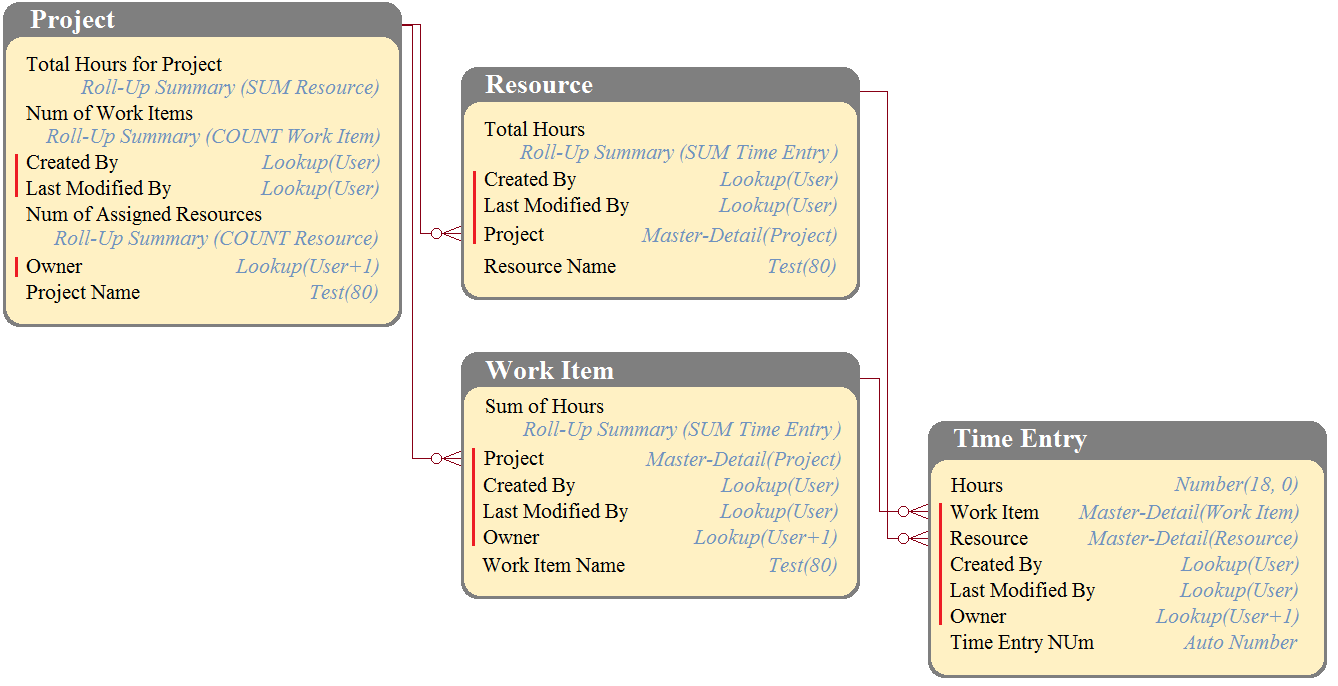
What should the Architect consider in this situation?
Unlock All Features of Salesforce Data-Architecture-And-Management-Designer Dumps Software

Types you want

pass percentage

(Hours: Minutes)

Practice test with
limited questions

Support


